The Rowdy Days of Japanese Baseball
If you have ever watched a Japanese baseball game online or in a ballpark, you will have noticed the fans and their orderly conduct. Nowadays, it is a common thing, but there were times when (parts of) the Japanese fan bases misbehaved and acted like true hooligans.
While the NPB’s Central League has some fierce rivalries, the Pacific League has only one: The Seibu Lions vs. the Chiba Lotte Marines. This all started in 1952. Back then, the aforementioned teams were named the Nishitetsu Lions (from Fukuoka) and the Mainichi Orions (from the Tokyo area). The Lions were in fourth place and were in a slump. The Orions, on the other hand, were in second place, a half game behind the Nankai Hawks from Osaka. The Orions were confident they could surpass the Hawks with a series win against the Lions.
Despite the rainy season in Fukuoka, rain was pouring down, and still fans lined up to get tickets for the game of July 16th. In those days, the ballpark of the Nishitetsu Lions didn’t have a lighting system. The first pitch was at 5.00 PM, two hours after the designated start time, and both teams needed to make sure there were no further delays, as darkness would set in at 7.30 PM. At one point in the game, there was a rain delay. The Orions wanted to call the game, but the Lions didn’t. The grounds crews did everything in their might to make the field playable again. After 7.00 PM, the game was in the fourth inning, and the Lions were winning 5-4.
But Orions’ manager, Yoshio Yuasa, knew that when a new inning was started by sunset, the game wouldn’t count and had to be played again according to NPB rules. So the Lions started to delay. Their pitchers made countless pickoff attempts, players were moved in for water breaks, and batters were walked intentionally to slow down the game.
Of course the Lions realized what the Orions were doing, so they started to swing at everything, and soon they had a 9-5 lead, not realizing that this would work against them. With this long at-bat, the Orions would never start the fifth inning before sunset. When the fourth inning ended, the Lions took their defensive positions, but the Orions stayed in the dugout, and at 7.30 PM, the game was called, much to the chagrin of 15,000 Lions fans who had defied rainfall and humidity for hours for nothing, as their team didn’t win and the game had to be replayed from the start the next day.
According to the legend, one fan, a construction worker who had saved money for a month to attend the game, ran onto the field and smacked the umpire with his lunchbox. That was the spark plug for a big riot. The fans wanted the head of the Orions’ pitchers, and a player of the Lions had to stand in front of them to protect them. Eventually, the Orions’ players locked themselves up in the clubhouse.

Eventually Orions’ manager Yoshio Yuasa grabbed a microphone and begged the crowd to calm down. He said he took all responsibility for the incident, but the fans didn’t listen. Every riot cop and American soldier in Fukuoka came to the ballpark to drive out the mob. Notable fact, Yuasa was fired by the end of the season because of the incident.
This incident gave the Lions fans someone to hate, and the Orions fans saw Lions fans as brutes and the Lions as a dirty team that started the whole mess. So, a rivalry was born, even though both teams were more than a thousand km apart.
One year later, it happened again. In a meaningless game in Fukuoka, with both teams out of contention, a Lions player struck out and ended the game on a pitch Lions fans and players thought was a ball. Three hundred fans stormed the field and headed for the umpire. Once again, the riot police had to clear the ballpark.
In the following years, the Lions became the better team and their fans forgot about the incidents. But in 1972, twenty years after the first one, it would all flare up again.
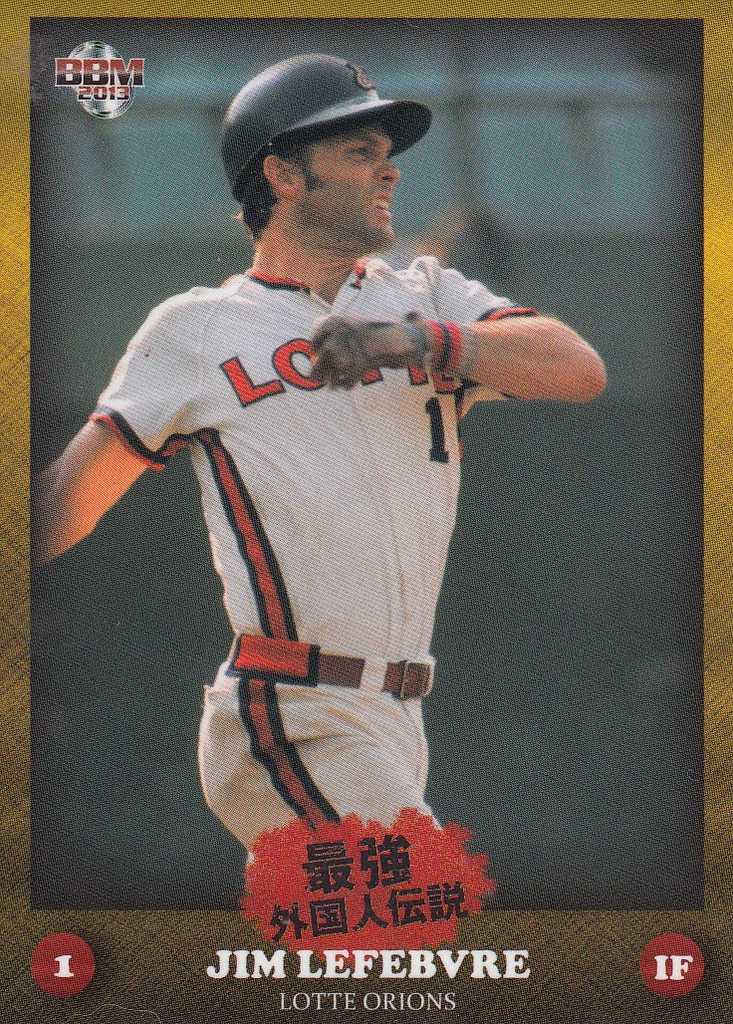
During the 1972/1973 off season, the Fukuoka team, now called the Taiheiyo Lions, were about to sign Jim Lefevre, who was a hot commodity thanks to his 1965 Rookie of the Year award. But there were other parties interested in him as well… You may guess it: the now-Lotte Orions, who signed Lefevre before the Lions could. Of course the Lions fans held a grudge against their long-time rival because of this, even though their club managed to sign a better player in Don Buford.
On May 3rd, 1973, both teams faced each other in Kanagawa and several hundreds of Lions fans made the trip from Fukuoka to support their team. After the Orions led the Lions 12-2 in the seventh inning, the Lions fans proved themselves bad sports. They threw bottles and cans on the field. To avoid being hit, third baseman Orito stayed as far away from the third baseline stands. Lions manager Kazuhisa Inao noticed this. He ordered his right handed hitters to pull the ball and his left handed hitters to bunt down the third base line. Despite getting closer in the game, it didn’t help the Lions to win the game. But… Orions manager Masaichi Kaneda was ticked off by Inao and went after him in the media, calling him a trickster and a coward for not calming down Lions fans and taking advantage of Orito’s reluctance to get closer to the third base line. You may understand that the tensions between the two clubs and their fan bases got bigger again.

On June 1st, the Orions had to visit the Lions and of course things went out of hand. Lions fans showed up in droves, so there was no room for Orion fans. In the stands behind the visitors dugout, rowdy Lions fans gathered, shouting insults to the opponent’s players. When a bottle was thrown on the field, Masaichi Kaneda took some infield dirt and threw it into the eyes of the rowdy Lions fans, which didn’t improve the situation. Eventually the riot police had to come to protect the Orions against the Lions fans. After the Orions won the game, they sprinted off the field to save their ass. With the tensions still high with the next two games, Kaneda did the only right thing: He kept his mouth shut and stayed in the dugout.

In the following years, fans behaved rather well, but players didn’t. At one game in April 1974, Sumio Hirota charged home on a ball hit to the outfield but Lions’ catcher Katsutoshi Miadera threw his shoulder in and tried to block Hirota. The run was awarded anyway, but manager Kaneda freaked out, ran on the field and tried to kick Miadera. Kaneda was grabbed by Don Buford and got punched by him. Both Buford and Kaneda were thrown out of the game.
The next Lions vs Orions series in Fukuoka, things went wrong again after the Lions hung posters in public transport, saying: “It is going to rain blood today.” Authorities and the NPB were done with the rowdy behaviour as violence also broke out during Giants-Swallows games, Giants-Tigers games, and Braves-Buffaloes games as well.
The commissioner of the Japanese national police agency , Mikio Takahashi, called all twelve NPB clubs and told them to fix things. The NPB set up a list with measures, including improvement of ballpark security and the banning of rowdy fans from ballparks.
Eventually, when the Lions were bought by Seibu and moved to the Saitama prefecture, the Lions fans changed into a well behaved bunch. Nowadays, with the Orions now being the Chiba Lotte Marines, the fans of the latter club are the unruly ones, but excesses like those from the past do not happen again.
But it doesn’t mean both teams like each other now.